Searching for an acrylic box in Malaysia and not sure where to start? Between display boxes, storage boxes, hampers, and fully custom builds, the options can get overwhelming fast. This guide breaks it down in plain language — the types available, what size and thickness actually make sense for your use case, roughly what to budget, and where to buy or customise one near you, whether you’re in KL, Penang, Johor Bahru, or beyond.
Key Takeaways
- Acrylic boxes are used across Malaysia for retail display, gifting and hampers, collectibles, storage, and food display — the right type depends on what you’re storing or showing.
- Thickness matters more than looks: 3mm is fine for small, lightweight boxes, while 5mm and up suits anything larger, stacked, or handled often.
- Malaysia’s heat and humidity mean boxes placed near windows or outdoors should use UV-stabilised acrylic to avoid yellowing.
- Off-the-shelf boxes are cheaper; custom sizes, UV printing, or branding add cost but suit business, event, and corporate-gifting use.
- Acrylic outperforms glass on weight and shatter-resistance, but scratches more easily — factor this into how the box will be used and cleaned.
- Local fabricators in KL, Penang, Johor Bahru, Melaka, and Kota Kinabalu can typically cut and assemble custom sizes within days.
Understanding Acrylic Boxes in Malaysia
What Is an Acrylic Box, Exactly?
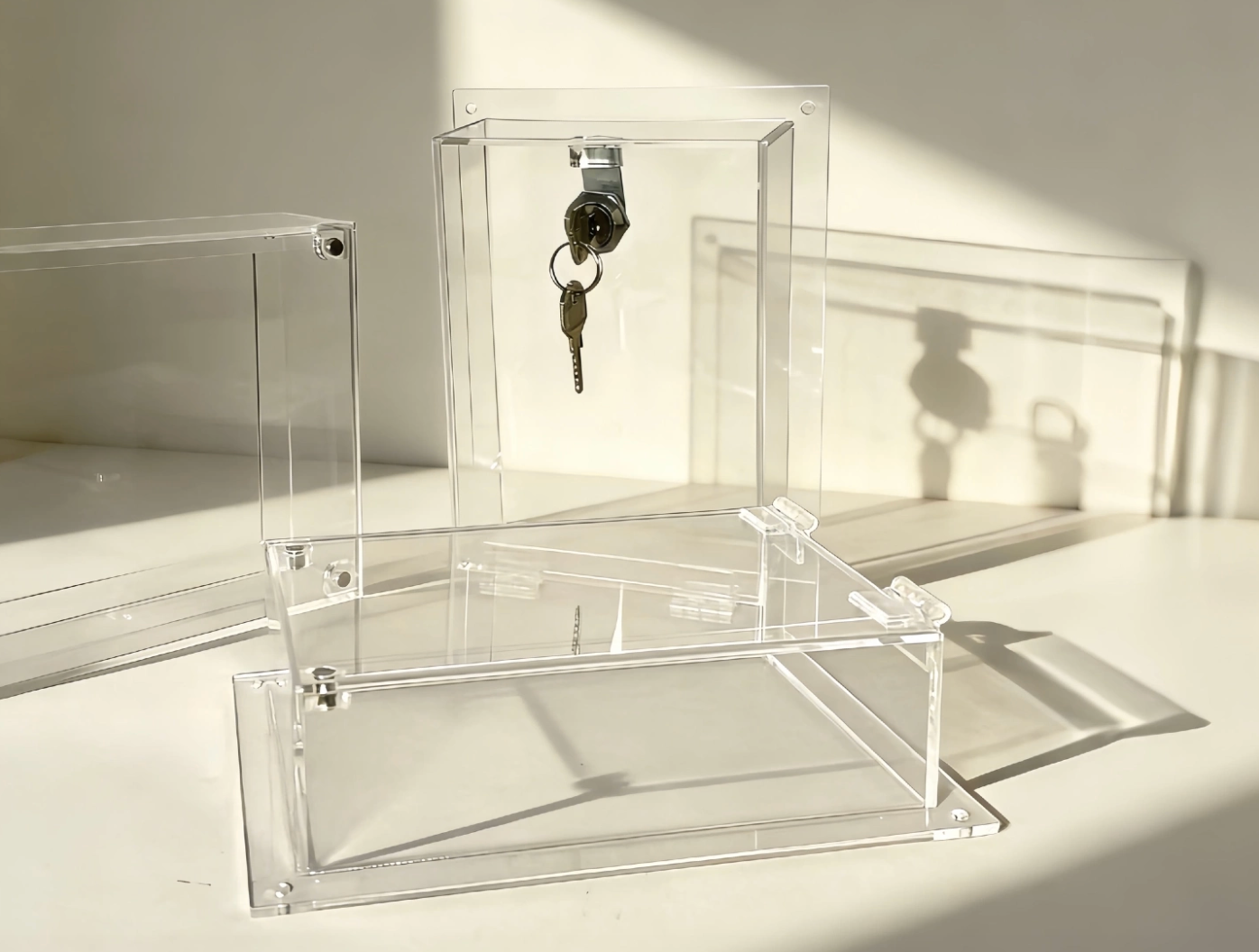
An acrylic box is a container made from cast or extruded poly methyl methacrylate (PMMA) — commonly sold under names like acrylic, Perspex, or Plexiglass — cut, edge-polished, and assembled into a box shape. Most are clear, but frosted, coloured, mirrored, and tinted finishes are all available. Compared with a cardboard or ordinary plastic storage box, an acrylic box is rigid, transparent, and durable enough for repeated use, which is why it shows up everywhere from retail counters to wedding tables to bakery display shelves. If you want a primer on the material itself before choosing a box, our guides on types of acrylic sheets and cast vs extruded acrylic cover the basics.
Common Types of Acrylic Boxes You’ll Find in Malaysia
- Display box (open-front or with a lid): used for retail merchandise, figurines, and collectibles. See more on common uses of acrylic display boxes.
- Storage or organiser box: for closets, cosmetics, or stationery — acrylic shoe box organisers are a common example.
- Hamper and gift box: popular for Hari Raya, Chinese New Year, and wedding door gifts.
- Cake and food display box: made with food-grade acrylic, sometimes with ventilation holes.
- Riser or podium box: used in retail merchandising and product photography.
- Custom branded box: with a UV-printed logo or design for corporate gifting or F&B packaging.
Who Buys Acrylic Boxes?
This isn’t a niche product — it’s used by a wide range of buyers across the country, including:
- Retailers and boutique owners who need attractive, durable point-of-sale display.
- Home and lifestyle buyers organising cosmetics, accessories, or small collections.
- Event planners and couples sourcing wedding favours and hampers.
- Collectors who want a proper showcase for figures, cards, or memorabilia.
- F&B businesses such as bakeries and cafés that need food-safe display boxes.
Prefer a hands-on approach? Some hobbyists cut and assemble smaller boxes themselves — our guide on how to make an acrylic box walks through the basic tools, cuts, and safety precautions if you’d rather DIY.
Material Properties & Performance
Strength and Durability
Acrylic is significantly more impact-resistant than glass of the same thickness, so a dropped acrylic box is far less likely to shatter — though a hard corner impact can still crack or chip it. Thicker acrylic (5mm and up) is stiffer and better resists warping when a box is stacked, moved often, or holds real weight, which matters most for storage boxes and larger display cases. Acrylic sheet used in fabrication is generally graded against recognised material standards, including those published by ASTM International for acrylic plastic sheet used in general-purpose and glazing applications — worth asking about if you need a specific performance grade for a commercial project.
Clarity, Colour, and Finish
Standard clear acrylic gives near-glass clarity, which is useful when you want the contents to be the focal point. Frosted acrylic diffuses light and softens the outline of what’s inside for a more discreet look, while coloured or tinted acrylic works well for branded retail displays or decor pieces. If you want something that looks premium without being fully see-through, a frosted lid paired with a clear body is a common combination fabricators can cut to order.
Thickness at a Glance
- Small collectible, jewellery, or single-item display: 3mm clear acrylic is usually enough.
- Retail product box or hamper: 3–5mm, depending on overall size and handling frequency.
- Storage box that gets stacked or holds weight: 5mm or thicker for structural stability.
- Large custom showcase or cabinet-style box: 6–10mm with reinforced edges — see our notes on choosing acrylic thickness for display stands for a similar decision process.
Choosing the Right Acrylic Box for Your Needs
Malaysia’s Climate: What to Consider
If the box will sit near a window, under strong indoor lighting, or fully outdoors — say, at an outdoor bazaar or an evening wedding reception — ask your supplier for UV-stabilised acrylic. Malaysia’s year-round heat and UV exposure can gradually yellow untreated acrylic. For purely indoor, air-conditioned use — which covers most retail counters and homes — standard acrylic performs well without any special treatment.
Budget: What Should You Expect to Pay?
Cost depends mainly on size, thickness, and customisation. A small, standard clear display box is the most affordable option; price rises with thicker panels, larger custom dimensions, coloured or mirrored finishes, and add-ons like UV-printed branding or hinges. See our acrylic sheet price guide for Malaysia for a sense of how material cost scales with thickness. If you’re ordering in bulk — wedding favour boxes or retail packaging, for example — ask suppliers about volume pricing, since most offer better per-unit rates above a certain quantity.
Durability for Stacking and Repeated Handling
If a box will be opened and closed often, stacked with others, or used to store something with real weight, prioritise thickness and check how the panels are joined and reinforced. A well-made 5mm box will generally outlast a thinner box that looks similar but flexes or cracks under repeated use.
Comparisons
Acrylic vs Glass vs Plastic vs Cardboard
| Acrylic Box | Glass Box | PETG / Plastic Box | Cardboard Box | |
| Weight | Light | Heavy | Light | Very light |
| Shatter resistance | High | Low | Medium–High | N/A (crushes) |
| Clarity | High | Highest | Medium | None |
| Scratch resistance | Medium | High | Low–Medium | N/A |
| Custom sizing | Easy | Difficult / costly | Easy | Easy |
| Typical cost | Medium | High | Low | Lowest |
For most Malaysian buyers weighing an acrylic box against a glass display case, the appeal comes down to weight and safety: acrylic is easier to move, ship, and mount, and it won’t shatter into sharp shards if knocked over — a real consideration for retail counters, homes with kids, or hampers being transported to an event. The trade-off is that acrylic scratches more easily than glass, so it needs slightly more careful handling and cleaning (more on that below).
Standard (Off-the-Shelf) vs Custom-Made
Off-the-shelf boxes come in common sizes and ship faster, making them the cheaper option for straightforward display or storage. Custom fabrication is cut to your exact dimensions — useful for oddly-shaped products, branded retail displays, or customised products that need to match a specific set or theme. Expect a short lead time, often just a few working days, for custom orders from most Malaysian fabricators.
Acrylic Boxes Across Malaysia
Availability and pricing vary a little by region and by how far a supplier needs to ship. Buyers in the Klang Valley typically have the most choice, with several fabricators in Kuala Lumpur offering same-week custom cutting. Outside the Klang Valley, custom orders are usually still available — check turnaround time with suppliers serving Penang, Johor Bahru, Melaka, and Kota Kinabalu before ordering, especially if you’re working toward an event date.
Buying, Customisation, and Maintenance
Getting a Custom Acrylic Box Made
Most fabricators follow a similar process: confirm your dimensions and material (thickness, colour, finish), laser-cut the panels, polish the edges, then glue or solvent-weld the panels into the finished box. Adding a hinge, UV-printed design, or engraved logo happens during this fabrication stage — see our overview of custom acrylic fabrication for what to expect. If you’re ordering for an event or business launch, build in a few extra days as a buffer in case of revisions.
Cleaning and Caring for Your Acrylic Box
Wipe it down with a soft, clean cloth and a small amount of mild soap and water. Avoid glass cleaners, ammonia-based products, or alcohol, which can cause fine surface cracking (crazing) over time — our full acrylic display case cleaning guide covers this in more detail. Skip paper towels or rough cloths too, since they can leave micro-scratches; a microfibre cloth is the safer choice for regular dusting.
Scratches and Repairs
Light surface scratches can usually be polished out with an acrylic polish and a soft cloth. Deeper scratches or a cracked corner are harder to fix invisibly and are often better handled by a fabricator, especially if the box is otherwise in good shape.
Where to Buy or Order One
If you already know what you need, browsing where to buy acrylic display cases in Malaysia is the fastest route to a standard option. For anything with specific dimensions, branding, or an unusual shape, reach out to a local fabricator directly with your measurements — most can quote same-day. Malaysia’s product and material testing generally follows guidelines from bodies like SIRIM QAS International, which certifies plastics and consumer products for quality and safety — a useful reference point if you need documentation for a commercial or food-contact order.
Wrapping Up
Whether you need a simple box to protect a collectible or a fully branded display for a store launch, the right acrylic box comes down to matching thickness and finish to how it’ll actually be used — then deciding whether an off-the-shelf size will do, or a custom build is worth the small extra wait. If you’re unsure, send your measurements and intended use to a local fabricator; a good one will recommend a spec rather than upsell you on one.
Frequently Asked Questions
What is an acrylic box used for in Malaysia?
Acrylic boxes are used across a wide range of settings in Malaysia. Retailers use them to display products or merchandise, F&B businesses use food-grade versions for cakes and pastries, and event planners rely on them for wedding hampers and door gifts. Collectors often choose acrylic display boxes to protect and showcase figures, cards, or memorabilia without hiding them behind cardboard, and at home they double up as clear storage for cosmetics, stationery, or accessories. The common thread is that acrylic offers a lightweight, shatter-resistant, see-through alternative to glass or cardboard, so it suits anything where visibility and durability both matter — see more common uses here.
How much does an acrylic box cost in Malaysia?
Pricing depends mainly on size, thickness, and customisation. A small, standard clear display box is the most budget-friendly option, while larger custom dimensions, thicker panels (5mm and above), coloured or mirrored finishes, and add-ons like UV-printed branding or hinges all push the price up. Bulk orders — wedding favour boxes or retail packaging, for example — usually come with better per-unit pricing, so it’s worth asking suppliers for a quantity discount if you need more than a handful. For a sense of how material cost scales, see our acrylic sheet price guide for Malaysia; for an exact quote, most fabricators will ask for your dimensions, thickness, and finish before confirming a price.
Where can I buy acrylic boxes in Malaysia?
Acrylic boxes are available from fabricators and suppliers across the country, with the widest selection concentrated in the Klang Valley. If you’re based outside KL, several suppliers also serve Penang, Johor Bahru, Melaka, and Kota Kinabalu, either with local pickup or nationwide delivery. For standard sizes, browsing a supplier’s ready-made range is usually the quickest option; for a specific size, finish, or branding, contact a fabricator directly with your measurements so they can quote and cut to order.
What thickness should I choose for an acrylic box?
It depends on the box’s size and how it’ll be used. For small, lightweight items like jewellery or a single collectible, 3mm acrylic is usually sufficient. For retail display boxes, hampers, or anything handled regularly, 3–5mm strikes a good balance between clarity and sturdiness. If the box will be stacked, hold real weight, or serve as a larger showcase or storage unit, go with 5mm or thicker for structural stability — our guide on choosing acrylic thickness walks through the same decision process for display stands. When in doubt, a supplier can recommend a thickness once they know the box’s dimensions and intended use.
Is an acrylic box better than a glass box?
It depends on your priority. Acrylic is significantly lighter and far more shatter-resistant than glass of the same thickness, which makes it safer and easier to move, ship, or mount — a real advantage for retail counters, homes with children, or boxes that travel, like hampers. Glass, on the other hand, scratches less easily and has marginally better clarity — see our full acrylic vs glass comparison for the details. For most everyday uses — display, storage, gifting — acrylic’s durability and lighter weight make it the more practical choice; glass tends to make more sense for fixed, high-end display pieces where scratch resistance is the priority.
Can I get a custom-made acrylic box with my own design or logo?
Yes — most fabricators in Malaysia offer custom cutting to your exact dimensions, along with options like UV printing, laser engraving, or embossed logos for branded retail packaging, corporate gifts, or F&B display boxes. The typical process — covered in our custom acrylic fabrication overview — involves confirming your size, material thickness, and finish, then having the panels cut, polished, and assembled, with any printing or engraving done before final assembly. Turnaround is usually a matter of days rather than weeks, though it’s worth confirming lead time upfront if you’re working toward an event date or launch.
How do I clean and maintain an acrylic box?
Wipe it down with a soft, clean cloth and a small amount of mild soap and water. Avoid glass cleaners, ammonia-based products, or alcohol, which can cause fine surface cracking (crazing) over time — see our full cleaning guide for step-by-step advice. Skip paper towels or rough cloths too, since they can leave micro-scratches; a microfibre cloth is the safer choice for regular dusting. If light scratches do appear, an acrylic polish can usually buff them out; deeper scratches or cracks are best handled by a fabricator.
Is acrylic safe to use for food or cake display boxes?
Yes, as long as you use food-grade acrylic, which is manufactured to be safe for direct or indirect contact with food. This is commonly used for bakery and café display boxes, cake covers, and pastry cases across Malaysia. When ordering one, let your fabricator know it’s for food use so they select the correct grade of acrylic and, where relevant, add ventilation holes for airflow. Regular cleaning with mild soap and water — rather than harsh chemical cleaners — also matters more for food-contact boxes, both for hygiene and to keep the acrylic looking clear.